Sarson Ka Saag and Makki Ki Roti: The Real Taste of Winter, Made Easily at Home
As October settles in, mustard plants start rising in the fields of Punjab and one question travels through homes: when is the saag being made? Sarson ka saag is more than a dish; it is the announcement that winter is coming. The good news is that it is not hard to make at home. What it asks for is not skill so much as time and a low flame.
Ingredients. For the saag: 1 kg mustard leaves, 500 g bathua (chenopodium), 250 g spinach, 4–5 green chillies, 8–10 garlic cloves, a small piece of ginger, salt to taste, and 2 tablespoons of maize flour. For the tarka: 3 tablespoons desi ghee, 1 tablespoon finely chopped garlic, 2 whole dried red chillies. For the makki ki roti: 2 cups maize flour, half a teaspoon of salt, and lukewarm water as needed. White butter, to serve.
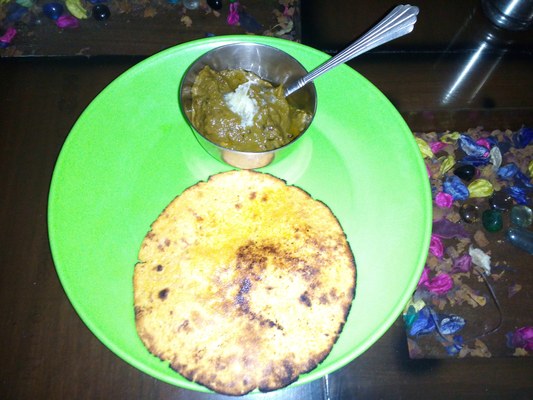
Method. Wash all the leaves thoroughly and chop them roughly. Put them in a large pot with the chillies, garlic, ginger, salt and a glass of water, cover, and cook on the lowest heat for at least ninety minutes to two hours, until the leaves have completely collapsed. Mash well with a wooden masher; if you use a blender, give it only a pulse or two — a coarse, grainy texture is the dish’s signature, not a smooth paste. Stir in the maize flour dissolved in a little water and cook fifteen minutes more until the saag thickens. Finish with the tarka: fry the garlic in ghee until golden and pour it over with the red chillies.
The roti and serving. Knead the maize flour and salt with lukewarm water into a fairly firm dough and rest it fifteen minutes. With wet palms, flatten each portion by hand and cook on a hot tawa on both sides, puffing it briefly over a direct flame at the end if you like. Serve the saag hot with a knob of white butter melting on top and the roti alongside. One tested tip: saag reheated the next day tastes even better, which is why experienced homes always make a generous pot.