UN Security Council Adopts Pakistan’s Diplomacy Statement on Active Hostilities
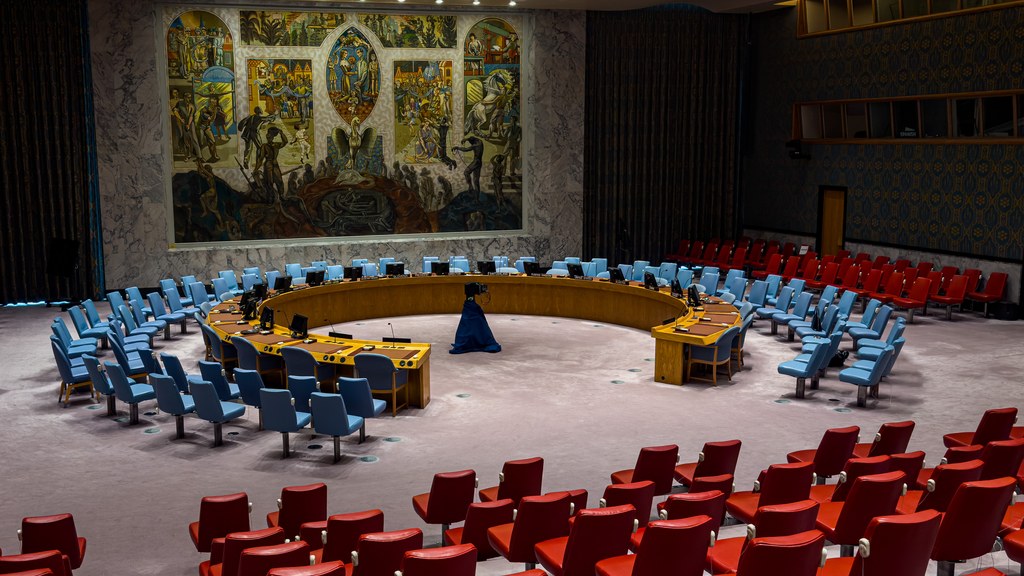
File photo: The Security Council chamber at UN Headquarters, New York — the statement was adopted at the Council's 5 November session.
The United Nations Security Council has adopted a Pakistan diplomacy statement calling on countries to keep talking even after wars begin. The presidential statement, titled “The Role of Diplomacy during Active Hostilities”, was adopted by consensus on Thursday and urges member states to sustain diplomatic engagement through armed conflict, work for ceasefires, prevent escalation and pursue lasting political settlements.
Ceasefires, civilians and humanitarian access
The statement says diplomacy during war remains essential to protect civilians, contain violence, stop conflicts spreading and allow humanitarian aid through. It urges countries to use mediation, good offices and direct or indirect contact between warring parties to ease tensions and open the way to negotiations, even while military operations continue. It also stresses that ending the fighting is not an end in itself — diplomatic engagement must continue after a ceasefire if a durable political settlement is to follow.
“Diplomacy must not end when hostilities begin”
Pakistan’s Permanent Representative to the UN, Ambassador Syed Haider Shah, welcomed the adoption, calling it an important contribution to international efforts to resolve conflicts peacefully. “The message of this Presidential Statement is both simple and powerful: Diplomacy must not end when hostilities begin. Indeed, it becomes even more indispensable,” he told reporters after the adoption. “Through good offices, open channels of communication and continued dialogue, diplomacy can provide a vital bridge from confrontation to de-escalation and peaceful settlement.”
The statement builds on Security Council Resolution 2788, adopted unanimously during Pakistan’s presidency of the Council in July 2025, which reaffirmed the peaceful settlement of disputes under the UN Charter. The new text extends that framework to the period after fighting has started, when communication between opposing sides most often breaks down and the risk of escalation is highest.
It recognises the contribution of individual member states that take diplomatic initiatives during armed conflicts and encourages them to keep doing so, welcomes efforts to strengthen the mediation capacities of regional and subregional organisations, and highlights the role of the UN Secretary-General, his special envoys and UN mediators in promoting dialogue. The Council also asked the Secretary-General to keep it informed of efforts in this regard. The statement reaffirms that diplomatic efforts must remain consistent with the UN Charter, international law and relevant Security Council resolutions, and notes the role of the International Court of Justice in settling disputes where states have accepted its jurisdiction. Deputy Prime Minister and Foreign Minister Ishaq Dar welcomed the adoption, saying: “When hostilities intensify, diplomacy must not retreat.” Presidential statements are adopted by consensus of all 15 Council members and express the Council’s collective position; unlike resolutions, they are not legally binding. The session was chaired by Latvia’s Ambassador Sanita Pavļuta-Deslandes, who holds the Council presidency for November. Pakistan is serving a two-year term as a non-permanent member of the Council for 2025–26.