Rawalpindi’s walled city markets and historic buildings get protected heritage status
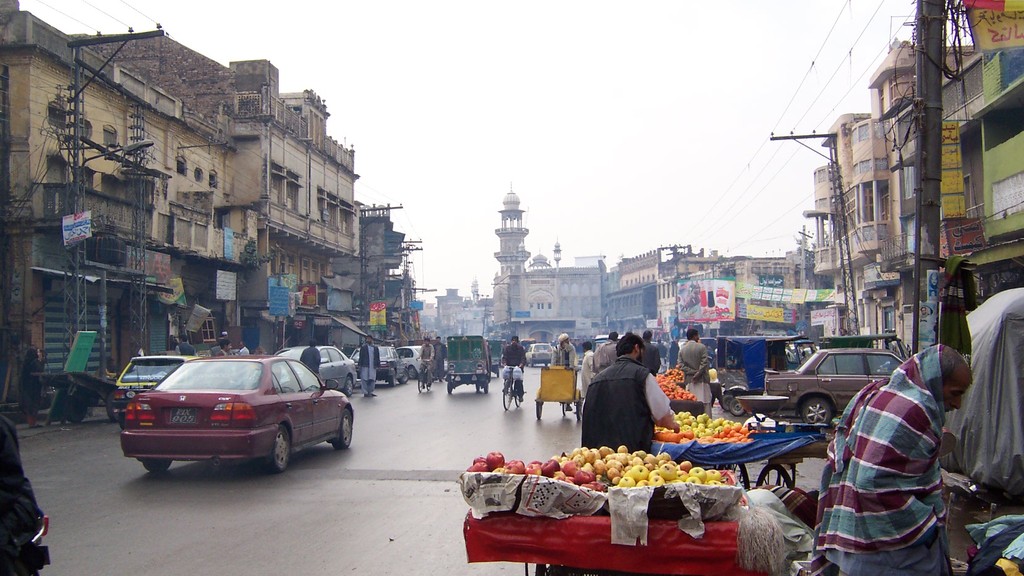
Jamia Masjid Road in Rawalpindi's old city, with the Central Jamia Mosque minaret in the distance. (Photo: Trueblood786, Wikimedia Commons)
The Punjab cabinet has declared the historic markets and buildings of Rawalpindi’s walled city protected heritage sites, approving a Rs5.88 billion plan for their restoration. The decision was taken at a cabinet meeting chaired by Chief Minister Maryam Nawaz Sharif, on the recommendation of the Directorate General of Archaeology. The Tourism, Archaeology and Museums Department will implement the project, titled “Heritage Conservation and Urban Revitalization of Walled City Rawalpindi”.
What will be restored
Under the plan, historic buildings will be restored to their original condition, their facades improved, streets made pedestrian-friendly, electricity cables moved underground, and public spaces rehabilitated. The protected list includes the Bagh Sardaran Complex, the Central Jamia Mosque, Haveli Sujan Singh, Haveli Mohan Singh, Krishna Temple, Haveli Durga Niwas, Kalyan Das Temple and Khurshid Cinema. Jamia Masjid Road, Purana Qila Bazaar, Sarafa Bazaar, Bhabra Bazaar and Bagh Sardaran Road are also on the list. Together, the heritage assets cover 2,546 kanal and six marla.
Traces of the Mughal, Sikh and British eras
The walled city’s buildings carry traces of the Mughal, Sikh and British periods, but decades of neglect have left many of them in poor shape. Recent reporting found more than 200 historic buildings crumbling across the city, with none of them declared a national heritage site. The 136-year-old Sujan Singh Haveli still stands in the narrow lanes of Bhabra Bazaar, while the Kalyan Das Temple in Kohati Bazaar was built in 1850. Officials say the new plan will not only save these buildings but also turn the old city into a more attractive destination for visitors.