Measles Outbreak in Shahdadkot Kills Three Children as Pakistan Ranks Sixth in Global Cases
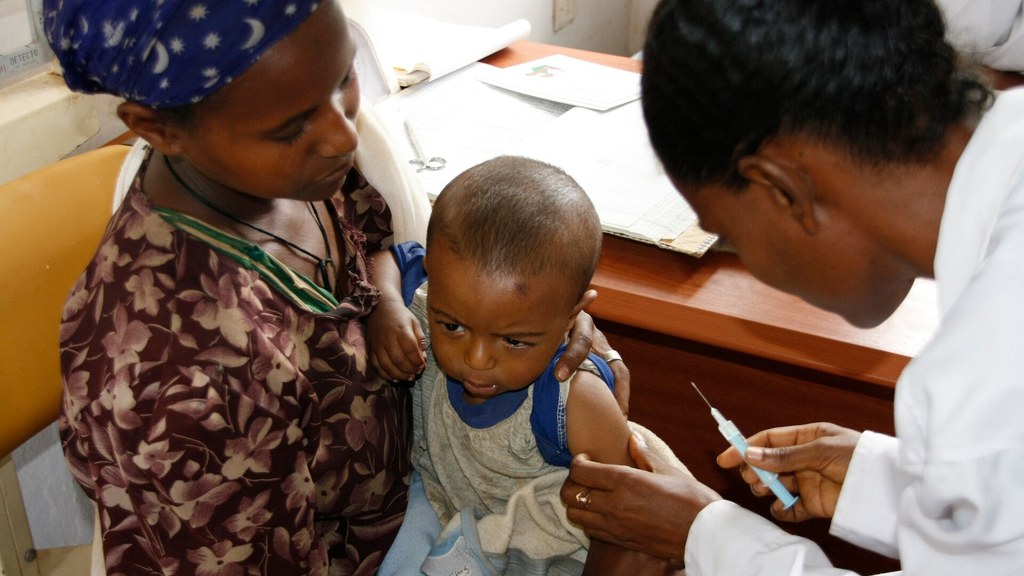
A health worker prepares to vaccinate a baby against measles as the mother holds the child. (File photo: Wikimedia Commons)
Three children dead in Durr Muhammad Chandio village
Three young children have died in a measles outbreak in a village in Sindh’s Qambar-Shahdadkot district, while more than 10 others have fallen ill. The children who died were three-year-old Rukhsana, two-year-old Zainab and four-year-old Ghulam Nabi Chandio. Residents said the cases surfaced in Durr Muhammad Chandio village, and the sick children are being treated at a local hospital. Villagers complained that the health department had been slow to act against the outbreak.
63 child deaths in Sindh in eight months
The Shahdadkot deaths are part of a wider problem. A report published in August showed that Sindh recorded 3,123 confirmed measles cases and 63 child deaths in the first eight months of 2026. Measles is a highly contagious viral disease that spreads through the air and can cause serious complications, including pneumonia and brain inflammation. Children who have not been vaccinated are the most vulnerable.
Pakistan sixth in the world for cases
A World Health Organization report released on Friday put Pakistan sixth in the world for measles, with 8,201 confirmed cases between April and September 2026. Only Bangladesh, Indonesia, Guatemala, India and Yemen recorded more cases in that period. Across January to May, the country logged around 9,950 infections and 83 child deaths. The WHO chief warned that measles does not forgive complacency.
Vaccine is free, yet a million children missed out
Globally, measles deaths fell to an estimated 72,000 in 2025, the lowest ever recorded, but the disease is regaining ground in countries including Pakistan. According to the WHO report, more than one million children in Pakistan have never received a single routine vaccine dose. In Sindh, the Expanded Programme on Immunization gives the first measles dose at nine months and the second at 15 months, free of charge.