Pakistan Pledges Eye Care for 60 Million People by 2030
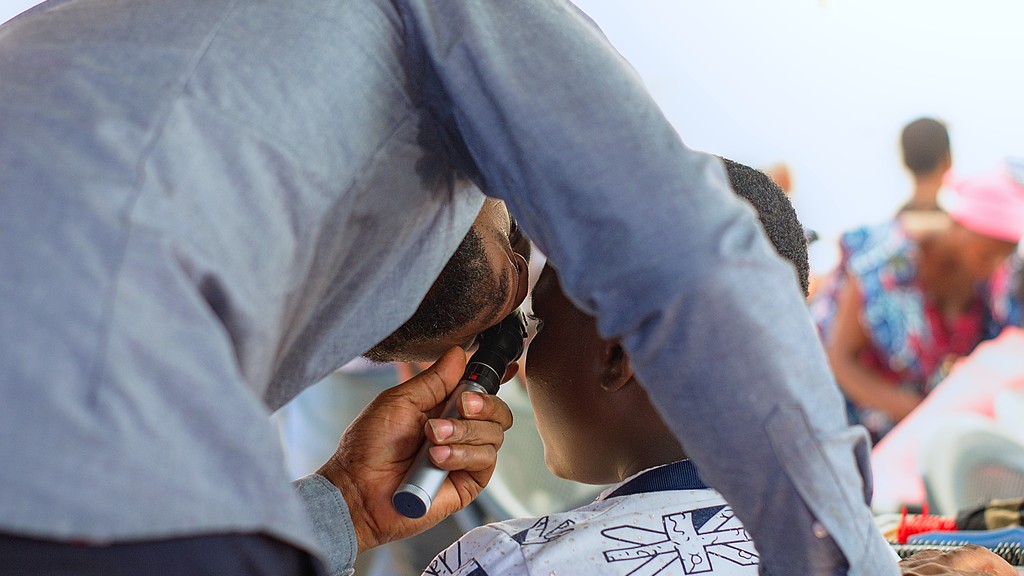
An optometrist examines a patient's eye during an eye test (file photo)
Pakistan eye care is set for a major expansion, with the government pledging to bring primary eye services within reach of up to 60 million people by 2030. The commitment was announced at the first Global Summit for Eye Health, held in Antigua and Barbuda last week, where more than 40 governments together pledged over US$1 billion in domestic funding to tackle avoidable sight loss.
150 rural centres to become eye care hubs
Under the plan, at least 150 additional Rural Health Centres across Pakistan will be converted into Advanced Primary Eye Care (APEC) centres. Each will be staffed by a trained optometrist and equipped to carry out eye examinations, refraction, early detection of cataract, glaucoma and diabetic retinopathy, primary low-vision care and referrals to specialists. With Pakistan’s population projected to reach nearly 277 million by 2030, the expansion is aimed first at rural and underserved communities, women and people with disabilities — the groups who struggle most to get an eye test, let alone treatment.
Training and monitoring
Pakistan has also pledged to strengthen its eye health workforce, establishing or upgrading at least four public-sector optical technician training programmes and training at least 200 optical technicians by 2030. Standardised eye health indicators will be built into the District Health Information System so progress can be tracked, and every APEC centre will be required to report fully on its services.
What the investment could return
The International Agency for the Prevention of Blindness (IAPB) estimates that investing US$148 million in Pakistan’s eye health between 2026 and 2030 could generate US$709 million in economic benefits, avert 367 deaths among older adults, prevent more than 43,000 cases of depression and deliver the equivalent of over 32,000 additional years of schooling. Sightsavers, which works on community eye care in Pakistan, said the commitment would help close gaps in remote areas, where people still wait too long for a basic eye examination.