Punjab’s water is running out: the FAO warning Pakistan can no longer postpone
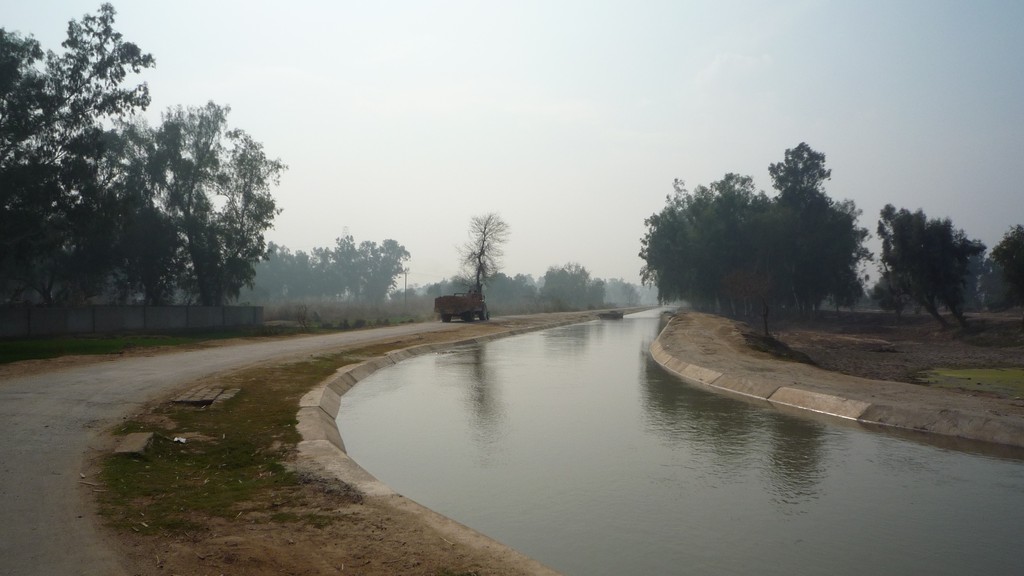
An irrigation canal in Faisalabad District, Punjab. File photo: PSSP (CC BY 2.0)
Punjab is the province that feeds the whole country — and a fresh report from the UN Food and Agriculture Organisation says that in this very province, demand for water has already overtaken supply. Groundwater is falling by about 5.5 billion cubic metres a year, and bridging the gap would take an additional 10 billion cubic metres of usable water every year. That is not just a statistic; it is the story of the coming years’ food, cities and farmers.
What the report says
The report, “Water and Land Accounting in Punjab”, rests on annual water accounts covering five water years, 2012 to 2017, prepared with advice from specialists including former Wapda chairman Shamsul Mulk and former Irsa chairman Rao Irshad Ali Khan. It finds river flows have fallen by about 30 billion cubic metres since the 1960 Indus Waters Treaty, only 1.7 per cent of the province is wetland, and the canal system runs as a run-of-the-river system for half the year — unable even to draw its full authorised share of river water.
Farmers and cities both at risk
The report is blunt: agricultural production is increasingly at risk from water stress and groundwater depletion, cities face limited access to freshwater and declining reserves, and shortages are forcing greater reliance on recycling low-quality water, while pollution from agro-chemicals and urban wastewater intensifies. It names four main challenges: growing scarcity across space and time, continuous groundwater depletion, competition between sectors with unaccounted transfers between them, and the need to protect renewable resources, wetlands and the natural landscape.
What should happen now
The FAO strongly recommends a commission to conduct a one-time review of provincial water resources, water policies, institutional mandates and existing strategies — bringing coherence between national and inter-provincial policies, an integrated way to assess transboundary water projects, and a coordination cell inside the Planning and Development Department. It also urges timely work to increase surface water, improve groundwater recharge and build mechanisms for inter-seasonal transfers. One honest caveat: the figures come from 2012–2017, so today’s position is probably worse. The question is no longer whether the water is running out. It is when the decisions will be taken.