
Supreme Court pendency falls 47% as cases drop to 31,927
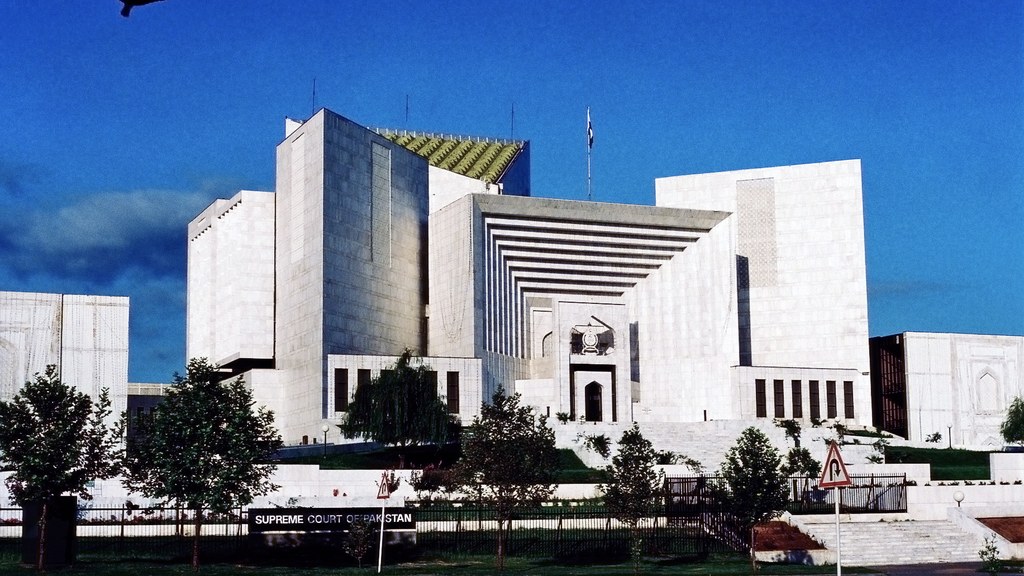
The Supreme Court of Pakistan building on Constitution Avenue, Islamabad. The court says its pending caseload fell 47 per cent between November 2024 and September 2026. Photo: Usman Ghani / Wikimedia Commons (CC BY-SA 3.0)
ISLAMABAD: The Supreme Court said on Friday that its pending caseload fell by 47 per cent in under two years, from 60,304 cases in November 2024 to 31,927 in September 2026. The figures appear in a report titled “Journey through Reforms and Innovation”, which covers the court’s reform programme over that period.
Sixty-four of 86 reform actions complete
The report says the court drew up an 86-point reform action plan to make the justice system more accessible, efficient and transparent. Of those actions, 64 are complete, 11 are on track and 11 need further attention. Between November 2024 and September 2026 the court disposed of 6,998 more cases than were filed. Annual disposals rose from 16,620 in 2023-24 to 25,989 in 2024-25, an improvement of about 56 per cent.
More than 22,000 cases moved to the Constitutional Court
The report also records that 22,213 cases were transferred to the Federal Constitutional Court following the constitutional amendment — and the fall in pendency is partly the result of that transfer. Those cases now sit with the Constitutional Court, so the decline is in the Supreme Court’s own docket. The reform programme gave priority to long-pending cases involving personal liberty, family rights, taxation and service disputes.
Digital filing, new rules and a live dashboard
Under the Supreme Court Rules 2025, the court has introduced electronic filing, digital records and virtual hearings, and a National Judicial Analytics Dashboard is now used to track pendency, disposal rates and institutional performance. The action plan is organised around eight areas, including case management, judicial reform, resource allocation, public access and data management. The court says the reform process will continue, with cases touching life, liberty, family rights and commercial matters keeping their priority.