SBP annual report: Inflation to ease to 5–7pc, growth at 3.5–4.5pc in FY27
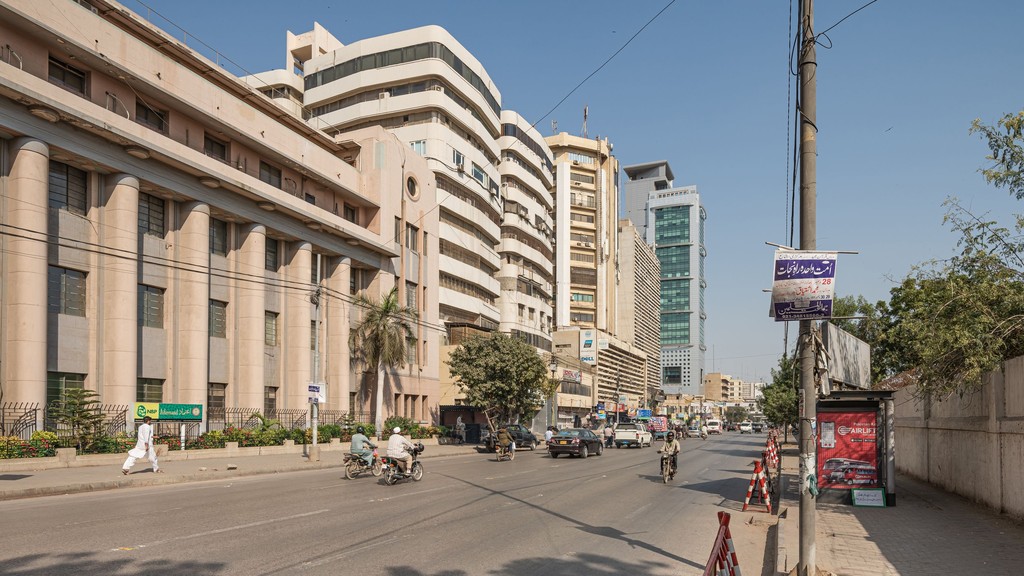
I.I. Chundrigar Road, Karachi — the country's financial district, where the State Bank of Pakistan is headquartered (file photo, February 2020)
KARACHI: The State Bank of Pakistan (SBP) has said the country’s macroeconomic conditions have improved, but deep-rooted structural reforms are still needed to put it on a sustainable high-growth path. Its Annual Report on the State of Pakistan’s Economy 2025-26, released on Monday, also warns that faster, more inclusive growth is essential to absorb a rapidly expanding working-age population.
Growth of 3.7pc in FY26 — but the longer trend is weak
Real GDP grew by 3.7 per cent in FY26, the report says, despite floods at the start of the year and disruption from the Middle East conflict in the latter part. The main impetus came from a strong recovery in large-scale manufacturing, which has strong forward and backward linkages across the economy. The longer picture is less encouraging: average GDP growth fell to 2.80pc in FY19–FY25, down from 4.2pc over the preceding seven-year period.
Unemployment and working poverty rising
The report puts unemployment and working poverty at the centre of the challenge. The unemployment rate rose to 7.2pc in FY25, up from 6.3pc in FY21 and 5.7pc in FY18. And in the past ten years Pakistan has managed to shed only 3.2pc in working poverty, compared with 15.3pc in Indonesia and 12.5pc in both India and Bangladesh — a gap the report links to low wages and informal employment, among other structural problems.
What the bank expects in FY27
The central bank projects real GDP growth of 3.5 to 4.5 per cent in FY27, with consumer price inflation gradually easing towards the medium-term target range of 5 to 7 per cent, and the current account deficit likely to stay between 0 and 1.0pc of GDP, helped by continued momentum in workers’ remittances. The mobilisation of $3 billion through Eurobond issuance in September 2026, foreign exchange purchases and projected official inflows are expected to support a further build-up of reserves towards four-month import cover. But the global energy price shock will keep upward pressure on inflation — year-on-year inflation moved into double digits from April 2026, even though prudent monetary and fiscal policies kept average inflation close to the upper bound of the 5–7pc range in FY26. The report’s prescriptions are familiar but blunt: encourage private-sector investment by fixing infrastructure gaps, support technology and skills development, rationalise taxes and simplify tax administration, and cut policy uncertainty with rules-based frameworks. It also flags three global trends reshaping the outlook — artificial intelligence and automation changing labour demand, the green transition, and geo-economic fragmentation favouring economies with stronger infrastructure, skills and institutions.