Petrol, diesel cut by Rs2 a litre as prices fall for the tenth time in a row
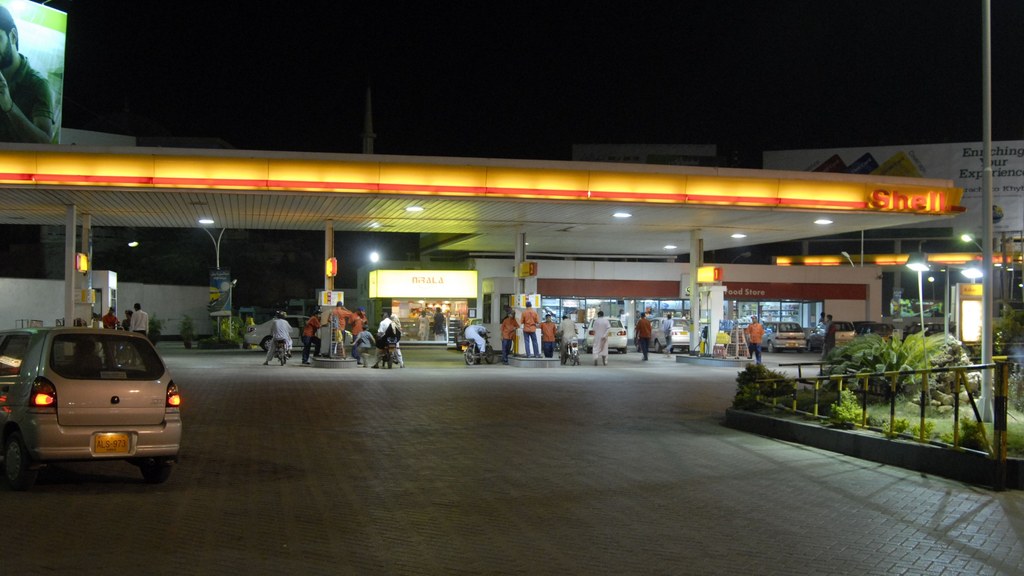
A Shell petrol station in Karachi at night. (File photo: Engr hirah, Wikimedia Commons, CC BY-SA 3.0)
ISLAMABAD: The government has cut the prices of petrol and high-speed diesel (HSD) by Rs2 a litre each, in the tenth consecutive decrease in fuel rates. Under a notification issued by the Oil and Gas Regulatory Authority (OGRA) late on Monday night, the new prices take effect from Tuesday: petrol will retail at Rs328 a litre, down from Rs330, and diesel at Rs358, down from Rs360.
A tenth cut — and diesel down too this time
The cut before this one, on Friday, had brought petrol down by Rs2 to Rs330 but left diesel untouched at Rs360. This time both fuels are cheaper. Taxes and duties stay where they were: Rs114 a litre on petrol and Rs100 a litre on diesel. The government says an arrangement announced on November 2, under which oil refineries bear a cumulative Rs15 billion impact on the petroleum levy over 30 days, is allowing a Rs14.71 reduction in the petrol price at the consumer end.
Prices now reviewed almost every day
Since July 17, fuel prices have been revised on a near-daily basis, and OGRA now publishes the daily prices on its website so consumers can track the changes. Before that, prices were announced weekly, a practice in place since early March. The Prime Minister’s Fuel Relief Scheme, rolled out on September 17, gives subsidised fuel to owners of motorcycles, rickshaws and vehicles of up to 800cc.
Pump owners want monthly revisions instead
The All Pakistan Petrol Pump Owners Association has asked for the frequent revisions to be replaced with monthly adjustments. Its vice chairman, Nouman Ali Butt, has written to Prime Minister Shehbaz Sharif arguing that repeated price changes are causing dealers inventory losses and serious operational difficulty.
Prices are still far below the peaks they hit in the spring. On April 3, petrol reached Rs458.41 a litre and diesel Rs520.35, after climbing from Rs266 and Rs281 respectively once the US-Iran war broke out on February 28. With the Middle East conflict still running, the government has also reintroduced austerity measures: markets must close by 9pm, and fuel allocations for official vehicles have been cut by half for three months. The stakes are everyday ones. Petrol powers private transport, small vehicles, rickshaws and two-wheelers, so its price lands hardest on the middle and lower-middle classes; diesel drives heavy transport, power plants and large generators. Together the two fuels sell some 700,000 to 800,000 tonnes a month — against barely 10,000 tonnes for kerosene.