Haleem: the slow-cooked winter dish Pakistani kitchens swear by
There is a smell that tells you winter has properly arrived in a Pakistani home, and it comes from a pot of haleem on the stove. This is not a dish you hurry. Meat, wheat and lentils cook together for hours in the same pot until everything collapses into one thick, silky mass — not a curry, not a stew, but something that stretches in strings when you lift a spoonful. Dhabas sell it by the bowl and families make it at home, and it is the dish cold evenings are built around. Hyderabadi haleem even earned a Geographical Indication tag in 2010. The recipe is the same old one everywhere; every home just has its own way of doing it.
What you need
Take 500 grams of boneless beef or mutton, cut into pieces, one cup of wheat, half a cup of chana dal, a quarter cup each of masoor, moong and mash dal, a quarter cup of rice, two onions, a tablespoon of ginger-garlic paste, a teaspoon of red chilli powder, half a teaspoon of turmeric, a teaspoon of garam masala and salt to taste. For serving, keep fried onions, green chillies, fresh coriander, mint, lemon wedges, ginger julienne and chaat masala ready. Soak the wheat, lentils and rice overnight — that soaking is the foundation of the whole dish.
How to make it
Cook the meat separately with the ginger-garlic, onion and spices until tender, then shred it. Boil the soaked grains until soft and mash them into a thick paste. Now put the meat and the grain paste together in a heavy pot and cook on a low flame for hours, stirring and mashing constantly. That steady mashing — ghontna — is what makes haleem: the better you work it, the smoother and stringier it turns. Add water as it thickens. At the end, heat ghee, fry sliced onions until golden and pour the tarka over the pot.
Serving it right
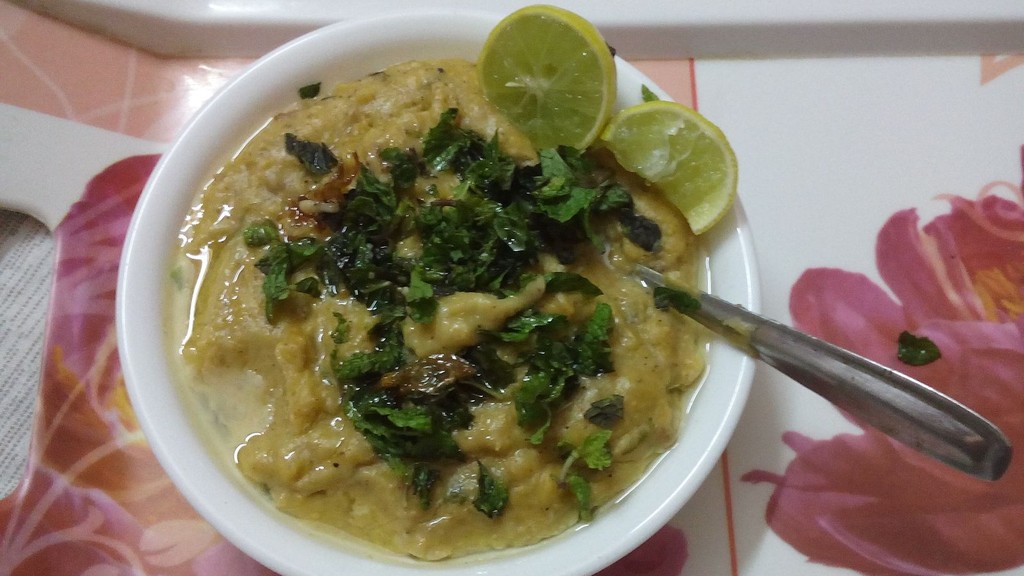
Ladle the haleem hot into bowls, squeeze lemon over the top, and add green chillies, coriander, mint, ginger and fried onions, with a light dusting of chaat masala if you like. Naan on the side makes the meal complete. One thing worth knowing: haleem tastes even better the next day, because the flavours settle into each other overnight. So if you make too much, do not worry — reheat it the following day and it will taste better than it did fresh.