Lahore High Court Orders Private Medical Colleges to Refund Excess Fees by November 29
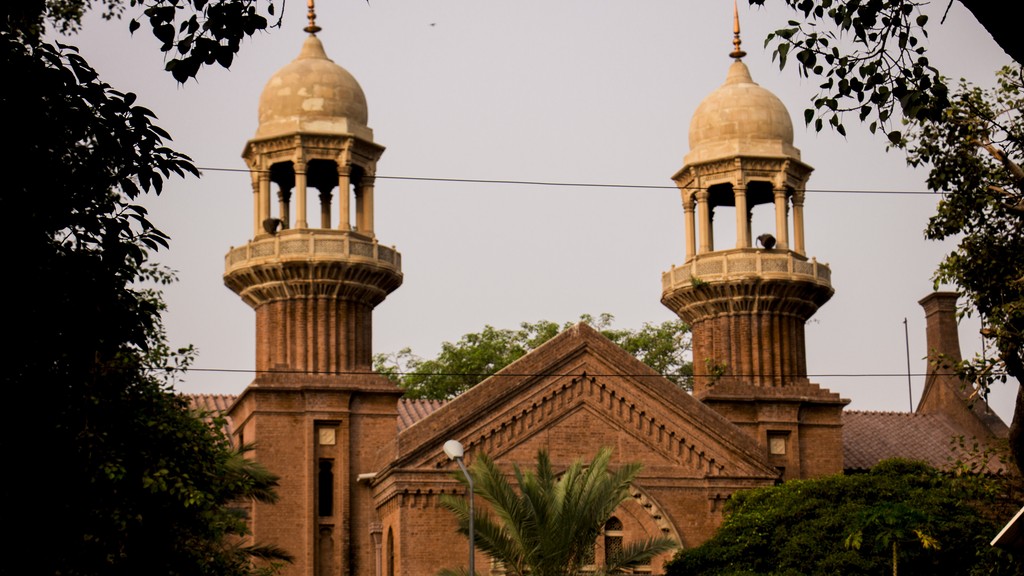
File photo: the Lahore High Court building — the court ordered private medical colleges to refund excess tuition fees. (Photo: MariyamAftab, Wikimedia Commons, CC BY-SA 4.0)
The Lahore High Court has handed medical students a landmark victory, ruling that the Pakistan Medical and Dental Council has full legal authority to cap the fees charged by private medical and dental colleges. Justice Khalid Ishaq, in a detailed 28-page judgment that emerged on Saturday, dismissed three petitions filed by private institutions challenging the regulator’s fee notifications — and allowed all 12 petitions filed by students and their guardians seeking enforcement of the caps.
Two colleges told to refund by November 29
The court directed University Medical and Dental College, Faisalabad, and FMH College of Medicine and Dentistry, Lahore, to adjust or refund excess tuition fees within 30 working days of October 30 — by November 29. The numbers in the judgment are stark. The Faisalabad college earned Rs5.099 billion in 2025, with a profit of Rs378.659 million, and collected Rs841,317 extra from every student. FMH Lahore earned Rs1.867 billion, profited by Rs111.941 million, and overcharged each student by Rs741,802. Under the March 11 notification, the fee ceilings for the two institutions stand at Rs2,026,341 and Rs2,052,099 respectively.
How the caps were set
The PMDC first fixed annual MBBS and BDS tuition at Rs1.8 million in its April 28, 2025 notification, allowing a 5% rise for the 2025 session and CPI-linked increases from 2026. An October 6, 2025 notification capped the 2025–26 session at Rs1.89 million. The colleges challenged all of it. The court was unmoved: institutions that had submitted audited accounts to the Fee Justification Committee and sought higher fees through the process could not then turn around and deny the regulator’s authority altogether.
Education is not a business
The judgment is blunt on the principle. Private medical colleges cannot operate as purely commercial enterprises, Justice Ishaq held, because medical education is bound up with human life and public health. The colleges’ argument under Article 18 — freedom of trade — failed: that freedom is not absolute and can be reasonably restricted in the public interest. But the court also drew a line the other way: the regulator must weigh legitimate institutional costs, and affordability alone cannot justify measures that would disable colleges from maintaining required standards.
Protection for students who complained
The court also took notice of students who said they faced retaliatory treatment for demanding their rights. Institutions were directed to refrain from any prejudicial treatment of litigating students — and warned that those who suffer it can move the court for contempt proceedings.
For thousands of medical students and their parents, crushed for years by rising fees, this is real relief. The test now is compliance: whether the money is actually back in students’ hands by November 29 — or whether the colleges take the fight to the Supreme Court.