Renewed digs at Bhir Mound uncover homes, streets and wells of Taxila’s earliest city
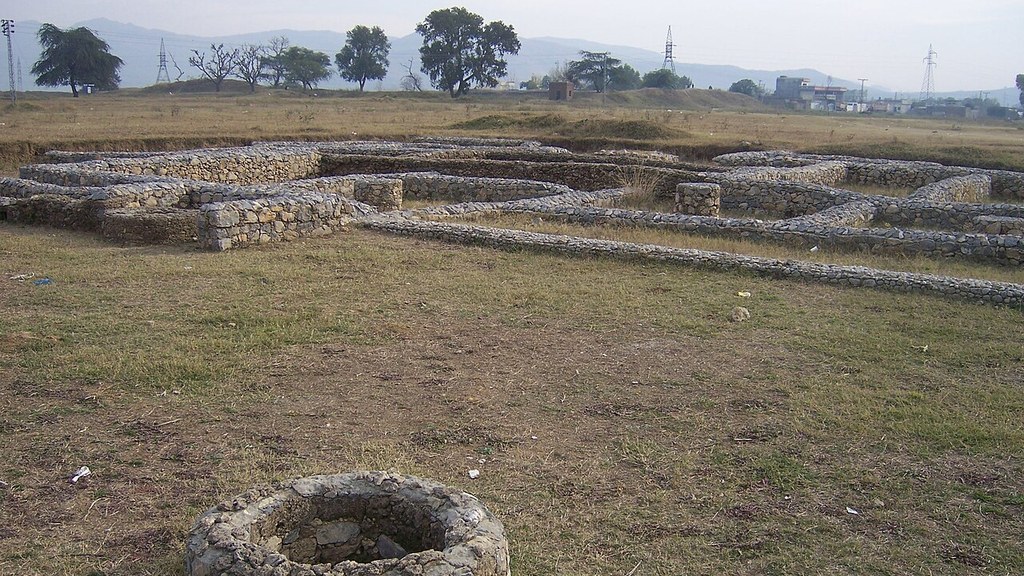
Excavated remains of the ancient settlement at Bhir Mound, Taxila. (File photo)
The buried story of one of South Asia’s earliest cities is coming back into the light at Bhir Mound, just south of the Taxila Museum. Renewed excavations by the Punjab archaeology department have exposed residential quarters, streets, drains and wells, along with a spread of artefacts that open a window on daily life more than two thousand years ago. The settlement, the earliest known urban site in the Taxila Valley, was occupied from around the sixth century BC until the early second century BC.
Four phases of a city
Aasim Dogar, the deputy director of the Punjab Department of Archaeology who heads the excavation team, said the settlement’s importance lies in four principal occupational phases, which trace how urban life evolved as one power gave way to another. The city lived through Achaemenid Persian influence, the arrival of Alexander the Great, the Mauryan Empire and the emergence of Indo-Greek rule. The latest digging has exposed an extensive stretch of the old habitation: homes and public buildings, street alignments, drainage systems, wells, soaking pits and what may have been industrial installations, with floors built in limestone, kanjur and graphite stone, rubble masonry and, in places, burnt brick bonded with mud mortar. Unlike Sirkap, the geometrically planned city that succeeded it, Bhir Mound grew organically, its narrow, irregular streets winding between courtyard houses and private wells.
Pottery, coins and a clay toy
The finds themselves are as telling as the walls. The assemblage includes red-ware pottery and fragments of Northern Black Polished Ware, terracotta figurines of people and animals, stone and terracotta beads, ivory and shell bangles, grinding stones, copper objects, tools and coins, along with punch-marked coins, sealings and jewellery. Among the more delicate recoveries are a clay toy model dated to between the early second century BC and the first century AD, a mould of a female figurine and a terracotta bowl. Compacted mud flooring and pavements laid with graphite stone slabs have also come to light.
Director General Zaheer Abbas Malik said the department has returned to the site under the Magnificent Punjab initiative and the vision of the Punjab chief minister. The work is being documented with GPS, drone surveys, 3D scanning and digital mapping, and a proposal to develop Bhir Mound into an open-air museum is under consideration. Conservation architect Rabab Chishti cautioned that newly exposed structures are especially vulnerable to weathering, environmental damage and human interference, making scientific documentation and protection essential. Numismatist Malik Tahir Suleman put it more simply: for Taxila, Bhir Mound is the material record of a formative period in the region’s urban history. The ruins of Taxila have been on UNESCO’s World Heritage List since 1980.