
FCC strikes down Sindh and KP infrastructure cess as unconstitutional
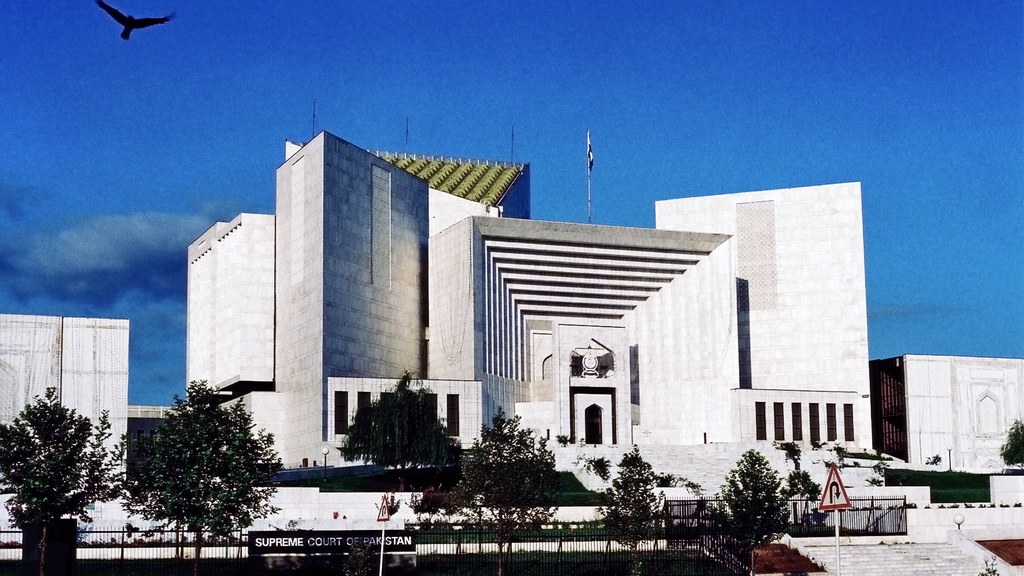
The Supreme Court of Pakistan building in Islamabad. File photo
ISLAMABAD: The Federal Constitutional Court has declared the infrastructure cess imposed by Sindh and Khyber Pakhtunkhwa unconstitutional, ruling that the levies fall outside the legislative competence of the provinces.
A two-member bench headed by Chief Justice Aminuddin Khan, and comprising Justice Aamer Farooq, announced its reserved judgement on Thursday, setting aside the decisions of the Sindh High Court and the Peshawar High Court that had upheld the cesses. The bench ruled after hearing a batch of 568 petitions filed by private parties. The short order was read out in court; the detailed judgement will follow.
A levy dating to 1994 in Sindh, 2022 in KP
The Sindh infrastructure cess dispute goes back to 1994. The Sindh Development and Maintenance of Infrastructure Cess Act, 2017 was given retrospective effect from July 1, 1994, and taxed goods entering or leaving Sindh by air or sea. The Sindh High Court upheld the levy in a judgement dated June 4, 2021. Khyber Pakhtunkhwa enacted its own Infrastructure Development Cess Act in 2022, imposing a cess on the transportation and movement of goods within the province. The KP Finance Act, 2024 raised the rate from one to two per cent, and the Peshawar High Court dismissed 157 petitions challenging the levy in a judgement on November 14, 2025, upholding its legality.
The federation’s case, the provinces’ defence
The federation argued that provinces cannot impose taxes on imports, exports and customs-related transactions — that ground belongs exclusively to parliament under Article 142(a) and Entries 27 and 43 of the Fourth Schedule. The provinces maintained that the cess was a provincial levy meant to finance development and road facilities. The court accepted the federation’s case and declared both laws beyond the provinces’ constitutional authority.
The ruling carries significant implications for the constitutional distribution of taxing powers between the federation and the provinces, for customs-related levies, and for inter-provincial trade and the movement of goods across Pakistan — particularly for the businesses that have challenged the cess in the courts for years.