
45-Foot Sperm Whale Spotted Off Karachi Coast for the First Time
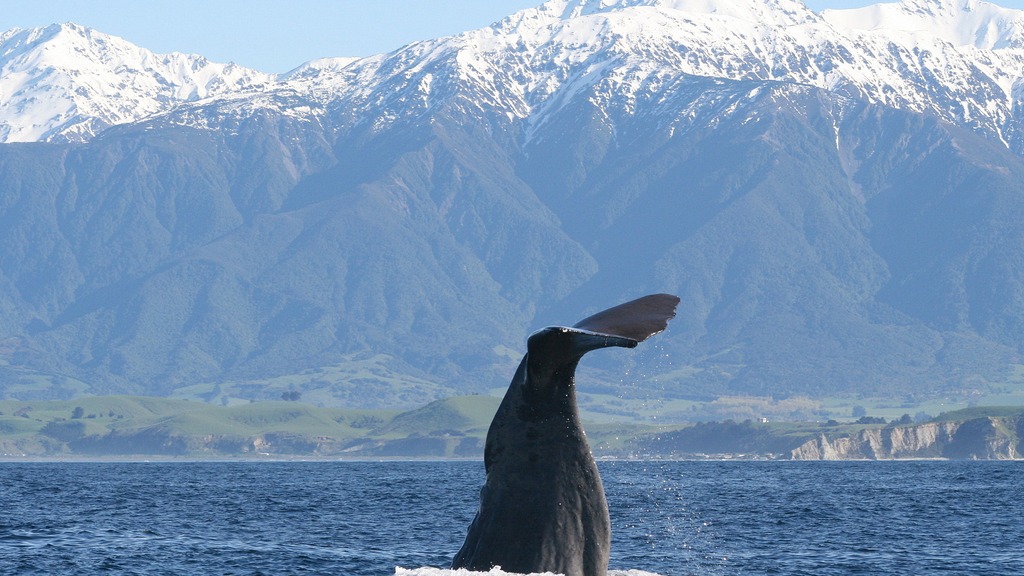
File photo of a sperm whale diving — the whale spotted near Karachi was of the same species.
Somewhere about 40 nautical miles southwest of Karachi, a shape broke the surface of the Arabian Sea — a sperm whale, roughly 45 feet long, caught on camera by a WWF-Pakistan expedition. It is the first time the species has ever been recorded off the Sindh coast, and marine experts are calling it a significant moment for Pakistan’s offshore waters.
An encounter on expedition
The whale was spotted during a marine expedition led by Zahid Maker, a member of WWF-Pakistan’s board. The footage captured the animal’s distinctive features — its characteristic blowhole, skin markings and prominent hump. Until now, sperm whales in Pakistani waters had only been reported off the Balochistan coast, including the country’s first live sighting in September 2017, when fishermen spotted a pair off Gunz, near Jiwani.
A hunter of the deep
The sperm whale is the largest of the toothed whales — and the largest toothed predator on Earth. It feeds mainly on cephalopods, including medium-sized, giant and colossal squids, as well as octopuses, and it hunts deep: typically between 300 and 800 metres down, sometimes reaching one to two kilometres. Pakistan’s waters hold part of its diet too, including the purpleback flying squid and the diamondback squid.
Twenty-six species — and a warning
Rab Nawaz, WWF-Pakistan’s senior director, said the sighting underlined the ecological importance of the country’s offshore waters and the need to protect the habitats and food chains that sustain such large marine species. Safeguarding that life, he added, needs stronger conservation, responsible fishing and collective action. The organisation’s technical adviser, Muhammad Moazzam Khan, described the record as an important one. WWF-Pakistan has now documented 26 species of cetaceans in the country’s waters — among them the blue whale, Bryde’s whale and the Arabian Sea humpback whale — and has trained more than 100 fishermen, mostly boat skippers, to record sightings of whales, dolphins and other large marine animals.